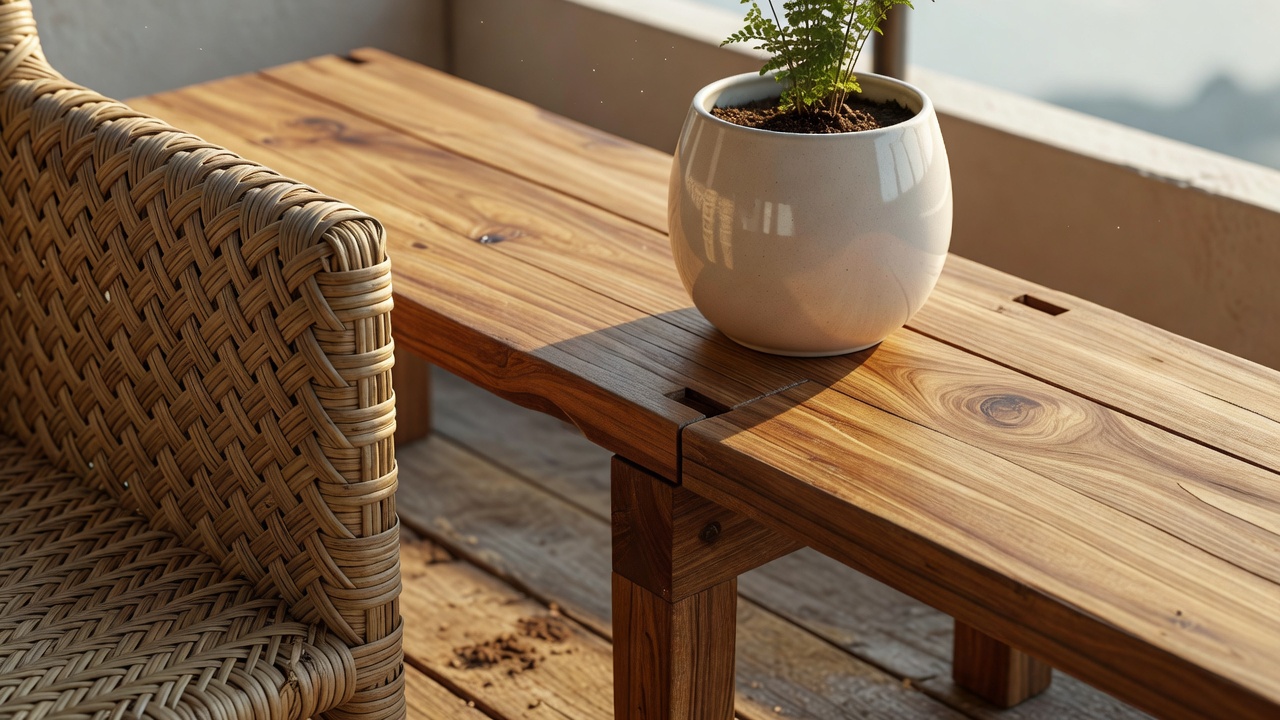
Natural materials can make an outdoor space feel close and human: a rounded timber arm, the irregular surface of clay, a woven back that filters light. But “natural” is not a weather rating, and an attractive indoor object does not become suitable for a balcony because it looks relaxed. Start with exposure, maintenance and storage. The right texture is one you can use comfortably without constantly rescuing it from the weather.
Ask how timber is built, not only what it is called
Species matters, but so do joinery, seasoning, finish and the way water leaves a piece. Look for furniture intended for the relevant outdoor exposure, with clear care instructions and replaceable hardware where possible. Inspect end grain, joints and horizontal surfaces where water may sit. A well-detailed chair can dry between showers; a poorly detailed one can hold moisture in its most vulnerable places.
Teak is commonly associated with outdoor furniture, but the name alone tells you little about sourcing or construction. Ask for traceable origin and credible certification claims rather than assuming that a pale timber is sustainable. The Forest Stewardship Council and the Programme for the Endorsement of Forest Certification provide useful frameworks for understanding claims. Verify a seller’s documentation, and remember that certification does not remove the need for product-quality checks.
Some wood develops a silvery appearance outdoors, while some finishes require periodic renewal. Decide whether you welcome that change before buying. Follow the manufacturer’s instructions for cleaning and refinishing, including ventilation and safe handling. Do not apply an indoor coating simply to keep the original color, and do not let oily or chemical runoff reach drains or neighboring property.
Distinguish natural rattan from outdoor weave
Rattan furniture has deep craft histories across Southeast Asia, including Indonesia and the Philippines. Its appearance is not a single generic “Asian” motif. Natural rattan cane can be beautifully resilient in appropriate settings, but prolonged wetting, intense sun and poor ventilation may shorten its life. A sheltered position is not automatically dry enough, especially where wind drives rain beneath an overhang.
Synthetic outdoor weave may resemble rattan while behaving differently. Ask about UV resistance, frame material, warranties and repair options. Powder-coated metal underneath a woven surface can still be vulnerable at damaged joints or fasteners, particularly in coastal air. Neither material is inherently maintenance-free. Choose based on your exposure and repair expectations, not on the assumption that one photograph reveals the underlying construction.
Use bamboo and ceramic with clear expectations
Bamboo craft traditions in places such as Beppu, Japan, show how specific material knowledge supports beautiful work. That does not mean every bamboo screen or chair is intended for permanent exterior use. Treatment, species, laminated construction and glue systems matter. Check exterior suitability, installation permissions and wind loading before using a screen; a decorative panel can behave like a sail.
Ceramic contributes weight and a calm surface, but a pot needs more than a pleasing glaze. Check drainage, frost suitability and the total saturated load. Unglazed terracotta can dry faster in some conditions; glazed containers may hold moisture differently. Neither rule replaces checking the plant’s needs. Protect the floor without creating hidden reservoirs or trapping water where you cannot inspect it.
Give every material a care rhythm
| Material | Check before buying | Everyday care |
|---|---|---|
| Outdoor timber | Exterior rating, source, joints and finish | Clear debris; allow drying; follow refinishing guidance |
| Natural rattan | Permitted exposure and dry storage | Remove dust gently; protect from prolonged moisture |
| Synthetic weave | UV rating, frame and repair options | Clean as specified; inspect hidden fasteners |
| Ceramic pots | Drainage, frost rating and wet weight | Inspect cracks and standing water |
| Outdoor textiles | Cover and filling specifications | Dry fully before storage; follow wash instructions |
Textiles deserve particular attention because a cover can feel dry while the filling remains damp. Outdoor-rated fabric and suitable cushioning are separate specifications. Removable covers make care easier, but a dry indoor storage location is often still useful. Avoid leaving a wet cushion in a sealed box. In a small apartment, the storage footprint is part of the furniture footprint.
Let restraint make the materials visible
You do not need timber decking, a bamboo screen, a stone lantern and a woven suite to create a meaningful space. One crafted surface reads more clearly beside something quiet. Keep existing flooring if it is safe and serviceable, then add a comfortable seat and one appropriate planter. Before installing any covering, confirm that drainage, waterproofing inspection and building access remain possible.
A thoughtful material palette should become easier to live with over time. Choose objects you can clean, move and repair. Let their origins remain specific, and resist using culturally recognizable objects as shorthand for a whole continent. Texture works best here when it supports the everyday pause rather than becoming the reason you spend every weekend maintaining the balcony.