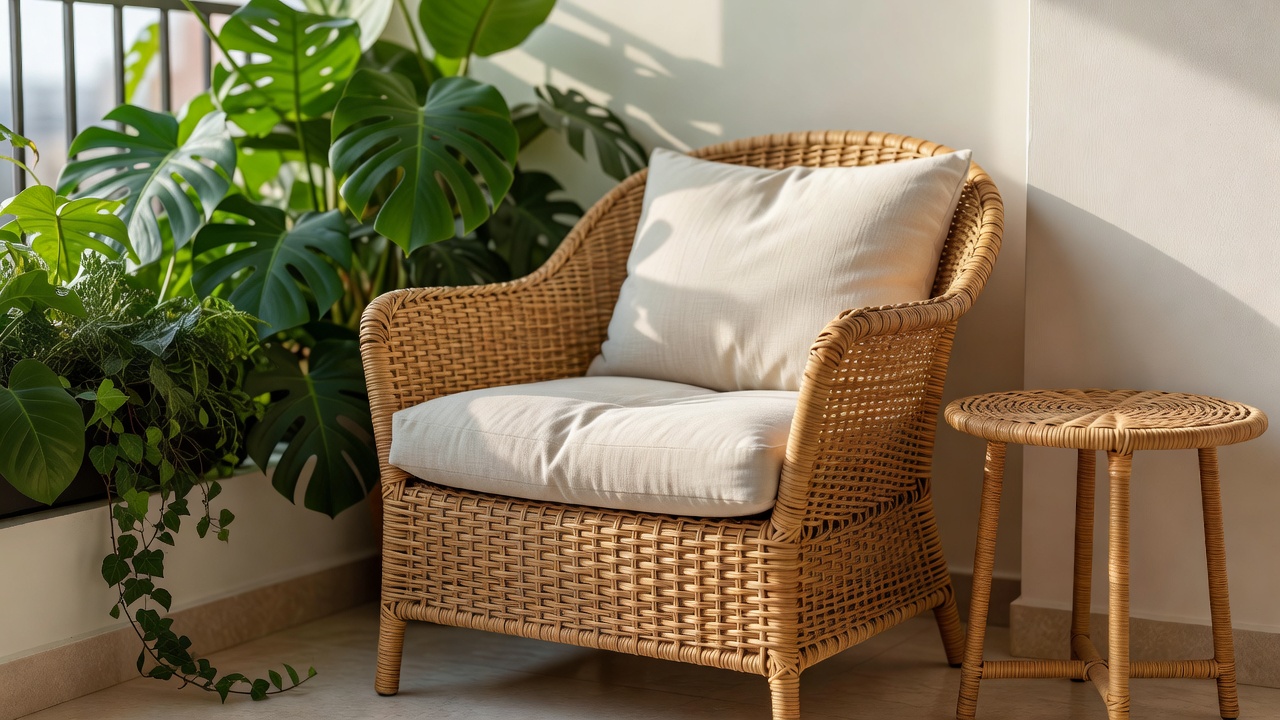
Start with the kind of pause you actually take. Morning coffee may call for an upright seat and a small surface. A longer reading session asks more of the backrest and arms. Conversation for two needs a different arrangement from a single place to unwind. Choosing for a real habit avoids the common small-space mistake of buying a generous lounge chair that leaves no room to use the balcony comfortably.
Try sitting, reaching and standing
Whenever possible, test a chair before buying it. Sit long enough to notice pressure at the front of the seat, the angle of the back and whether your feet rest comfortably. Check the usable seat depth rather than only the overall dimensions. A deep cushion can push a smaller person forward, while a shallow seat may offer too little support for someone taller.
Stand up without using a table or railing for support. If armrests help, check that they feel stable and sit at a useful height. A low chair can make the view feel expansive but may be difficult for people with knee, hip or balance limitations. Comfort is personal; photographs and universal “ideal” measurements cannot substitute for an individual fit assessment.
Measure the occupied chair
A chair’s catalog footprint is only its resting footprint. Add the space your knees and feet need, the movement of pulling the chair out and the route used to get past it. Reclining or rocking furniture needs additional operating space. Place tape or cardboard on the floor to test the full envelope, then open the balcony door and carry something through as you normally would.
Keep furniture away from the edge where it could create a climbing opportunity, particularly for children. Do not assume that a low table is harmless beside a guardrail. Never attach a hanging seat, hammock or swing to a balcony structure without a qualified assessment and explicit permission. Dynamic loads and attachment requirements are not equivalent to those of a normal freestanding chair.
Translate low seating without copying a room
Japanese floor-seating traditions and Korean floor-based domestic practices developed within particular interiors, materials and patterns of heating and use. Tatami and ondol are not interchangeable decorative labels, and neither translates directly to a damp exterior slab. If low seating appeals to you, borrow the close-to-the-ground perspective only when it genuinely suits your body and weather conditions.
A raised, outdoor-rated platform would bring its own load, drainage and approval questions; it is not a casual shortcut. In many apartments, a compact standard-height chair offers a more useful adaptation: visual simplicity, a deliberate view and a small reachable surface. Respect for a reference can mean understanding its purpose and deciding not to reproduce its form.
Choose flexibility you will actually use
Folding furniture can make a narrow balcony adaptable, but only if folding is easy and a safe storage location exists. Check the mechanism, locking action and manufacturer’s load rating. Consider pinch points and whether the item stays stable on your actual floor. A chair that needs two hands and several awkward movements to put away may remain open permanently.
Three useful seating routes
A storage bench can combine functions, yet the lid needs room to open and the contents need protection from moisture. Do not assume cushions will remain dry inside an outdoor box. Check ventilation, seals, placement and the manufacturer’s intended exposure. If opening the box requires moving every planter, the arrangement is not as convenient as it first appears.
Add softness without adding a damp problem
Choose cushions with appropriate outdoor fabric and filling specifications. Removable, washable covers help, but follow the care label and dry both cover and filling completely before storage. Consider how quickly you can bring cushions inside during rain. If that routine is unrealistic, a well-shaped chair with a small removable pad may be better than a deep upholstered seat.
Keep one useful surface within reach. A stable side table or a tray on a suitable support is usually more comfortable than balancing a hot drink on a railing. Check stability with the objects you actually use, and avoid lightweight loose items that wind can lift. Outdoor lighting and electrical accessories must also suit exposure and local electrical requirements; an indoor extension lead is not an outdoor design solution.
Finish with a real evening outside
Before adding another object, spend time in the arrangement. Can you turn toward a companion, rest an arm and reach your drink without stretching? Can someone pass, and can you return indoors easily when it rains? Small adjustments often matter more than another purchase. The most relaxing balcony is not necessarily the fullest or lowest or softest. It is the one that asks very little of you once you sit down.